Deep Fryers
Products · Deep Fryers
1 active deal
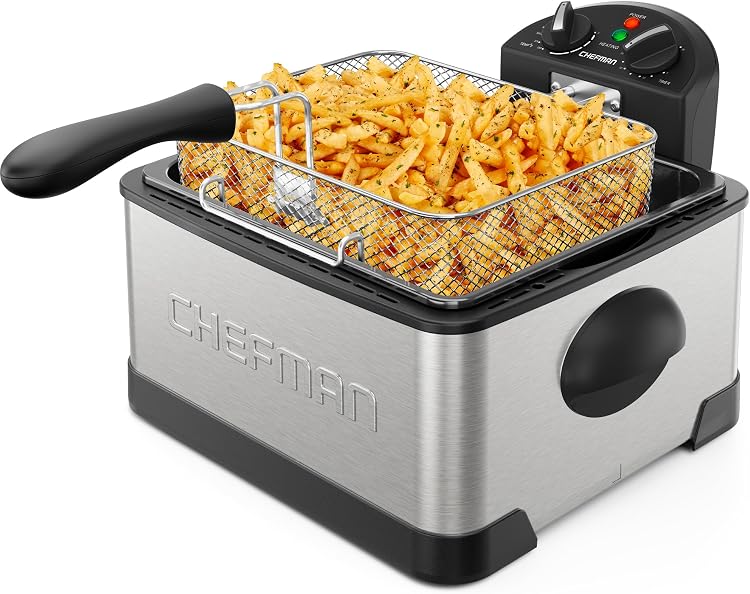
Deep fryers: size the oil tank and plan the whole frying cycle
An electric deep fryer cooks by immersing food in oil. Choosing one means considering not only food capacity but also the oil required, temperature recovery and what happens to the tank after cooking.
Oil volume and food capacity are different measurements
A tank holding several litres cannot hold the same volume of food. Check minimum and maximum oil levels and the recommended basket load. A large model may need substantial oil even for a small portion; a compact one may mean successive batches when guests visit. Basket shape matters for long pieces of food. Choose for the amount you normally fry and the space available for draining, rather than a litre figure presented as though it directly describes portions.
A thermostat does not prevent a temperature drop
Adding food can lower the bath temperature; an overloaded basket changes the process even though the dial shows the same setting. Check the adjustable range and how the appliance indicates readiness to begin or resume. Rated power alone cannot establish recovery speed, consumption or the finished result. A timer reminds you about time but cannot verify the inside of the food. Interpret programmes and dial markings alongside the instructions for loading and preparation, rather than treating them as automatic proof of doneness.
Hot oil handling requires a stable working position
Assess handles, the basket's draining support and access to controls without reaching over the oil. Use the lid according to the model's design; do not assume every lid allows closed-lid frying. The fryer needs a stable surface away from edges, children and cables that could pull it over. Do not move it while filled with hot oil or add water to the bath. Follow instructions for damp or frozen foods, as moisture can cause splashing.
Emptying and maintaining the oil belong in the decision
A removable tank or drain can simplify emptying only after the specified cooling period. Check which parts can be washed and which must stay out of water, especially the electrical assembly. Filters or a cool zone may reduce some debris but do not make oil usable indefinitely or remove every odour. Review consumables and the manufacturer's storage or replacement guidance. Used oil needs collection and disposal in accordance with local rules, never pouring down the sink. Include replacement oil and any disposable filters the model requires in your regular running costs.