Tires
Products · Tires
1 active deal
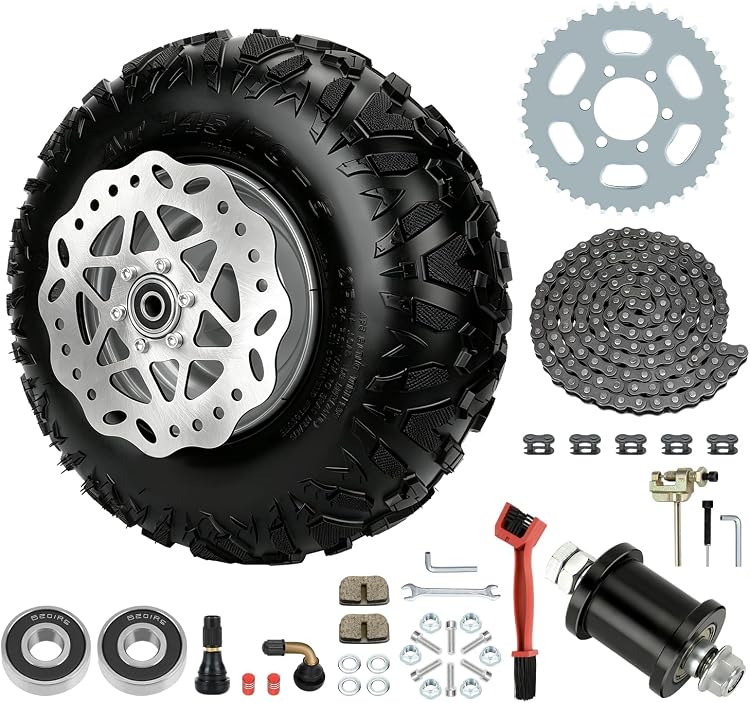
Tires: choosing the correct fit and road characteristics
A tire must match the vehicle version, wheel and intended use. An offer from the same brand is not enough to establish fitment. Find approved sizes in the documentation and resolve uncertainty with a qualified professional. This category covers car and motorcycle tires, not bicycle tires.
Read the complete tire identification
Check width, aspect ratio, diameter, load index and speed rating, alongside manufacturer-specific requirements. Currently fitted sizes do not necessarily prove which alternatives are approved. Establish whether particular construction, reinforcement or run-flat technology is required and whether the vehicle supports it. For motorcycles, front or rear position and tube-type or tubeless use are essential conditions. Matching the diameter alone is not enough to make a tire a suitable replacement.
Climate and the journeys you make
Summer, winter and all-season tires involve different performance and wear compromises. Consider usual temperatures, rain, snow and journey length. Marketing names do not replace markings required where you drive. Check local rules and any countries along your route; there is no identical winter-tire obligation throughout Europe. A tire label helps with certain characteristics but does not summarize every driving situation or all the performance requirements of a motorcycle tire.
A coherent set rather than isolated purchases
Verify with the manufacturer or workshop how models and replacements should be combined on your vehicle. Different sizes between axles may be an intended setup rather than an error. On motorcycles, recommended front-and-rear pairing deserves particular attention. Manufacturing date, storage and condition also matter. Do not infer remaining life from a date or advertised tread depth alone. A used tire requires assessment of damage and history that photographs may hide.
Include professional fitting in the budget
Allow for fitting, balancing, valves, old-tire handling and any sensor-related operations required by the vehicle. Confirm whether the price is per tire and whether the whole required combination is available. Use qualified fitting services rather than improvising removal or inflation. Afterwards, follow the vehicle's pressure and use guidance for the relevant load, not a generic seller recommendation. Uneven wear warrants investigation instead of simply buying a different tire model.