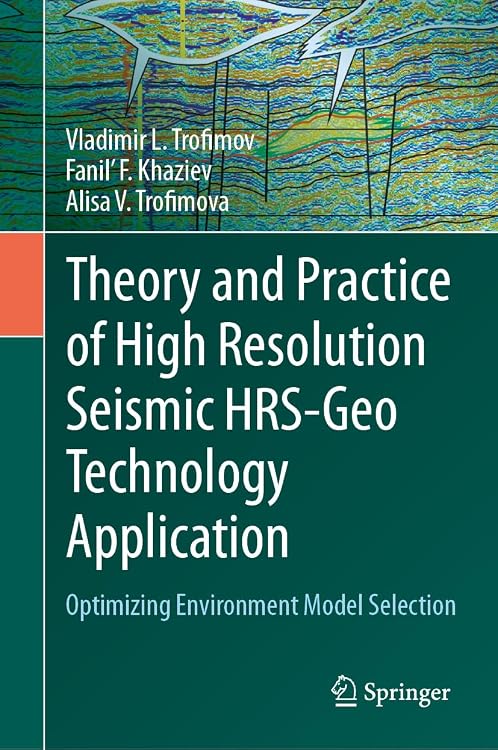
Theory and Practice of High Resolution Seismic HRS-Geo Technology Application
Theory and Practice of High Resolution Seismic HRS-Geo Technology Application is a technical monograph on applying HRS-Geo methods to seismic interpretation for oil and gas exploration. It covers acoustic impedance and reflection-coefficient models, geological indicators, and methods for refining seismic data analysis.
At a glance
- Explains HRS-Geo approaches for building detailed 2D and 3D seismic acoustic-impedance and reflection-coefficient models.
- Discusses iterative comparison of real and modeled data using objective-function vectors and residuals.
- Covers geological indicators used to assess oil and gas potential, with examples of HRS-Geo modules and seismic-data regularization.
Reference price: $169.99
Price checked: Nov 14, 2026
View offerAhead of Black FridayExplore the selectionPros and cons
Pros
- Connects methodological foundations with practical seismic interpretation examples.
- The subject matter is specifically relevant to complex geological analysis for oil and gas prospecting and exploration.
- The description identifies audiences ranging from geoscience specialists and researchers to students and developers.
Technical specifications
9 specifications| Publisher | Springer |
|---|---|
| Publication date | December 16, 2023 |
| Edition | 2023rd |
| Language | English |
| Print length | 410 pages |
| ISBN-10 | 3031415892 |
| ISBN-13 | 978-3031415890 |
| Weight listed | 7.6 ounces |
|---|---|
| Dimensions | 6.14 x 0.94 x 9.21 inches |
Who is it for?
A good fit for
- Geophysicists and geologists working on detailed seismic interpretation and oil and gas exploration.
- Graduate students and researchers in geological or geophysical specialties.
- Developers working with seismic interpretation methods or tools.
Less suited to
- Readers seeking a general introduction to geology or a nontechnical overview of energy exploration.
Frequently asked questions
What topics does this book cover?
The listing describes HRS-Geo methods for creating acoustic-impedance and reflection-coefficient models, interpreting geological indicators, and addressing seismic interpretation problems in oil and gas exploration.
Who is the book intended for?
The listing names scientists and specialists in seismic interpretation and exploration, geoscience students and graduate students, and developers.
How long is the book?
The listed print length is 410 pages.