 1 / 2
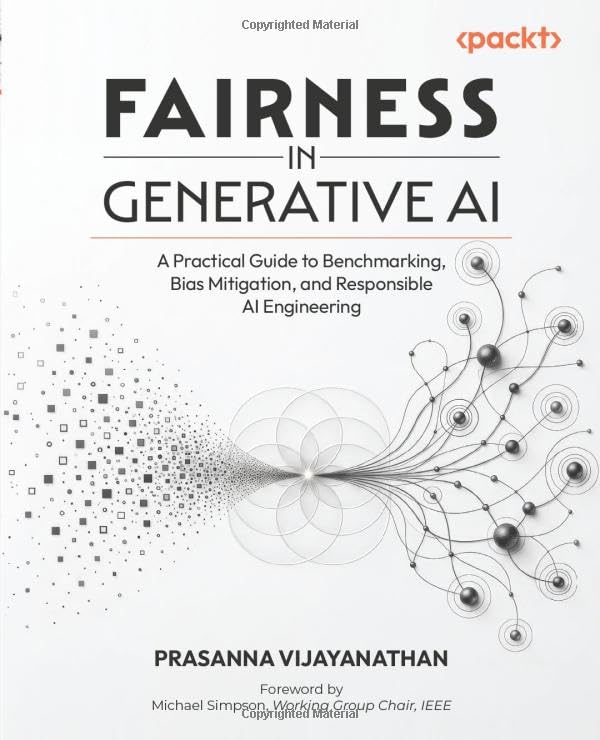
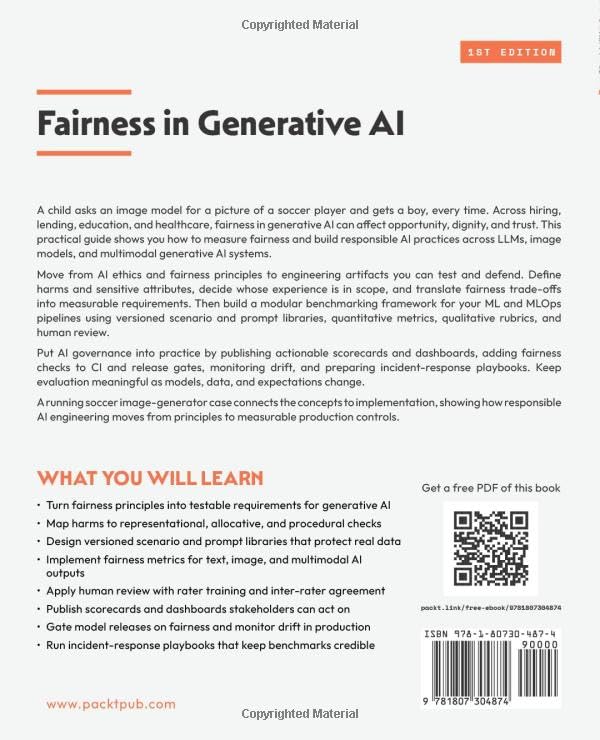
Fairness in Generative AI: A Practical Guide to Benchmarking and Responsible AI Engineering
Benchmarking Responsible Engineering: Fairness in Generative AI is a practical guide to turning fairness principles into measurable evaluation and governance practices. It covers benchmarks for text, image, and multimodal systems, with examples of human review, CI and release gates, scorecards, and drift monitoring. The listing says a working grasp of ML evaluation and Python is sufficient.
At a glance
- Explains ways to turn fairness principles and identified harms into testable requirements.
- Covers benchmark design for LLMs, image models, and multimodal generative AI.
- Describes versioned scenario and prompt libraries, quantitative metrics, qualitative rubrics, and human review.
- Connects evaluation to scorecards, dashboards, CI and release gates, drift monitoring, and incident response.
- Uses a recurring soccer image-generator case to connect concepts with implementation.
Reference price: $49.99
Price checked: Nov 14, 2026
View offerAhead of Black FridayExplore the selectionPros and cons
Pros
- Combines evaluation methods with operational practices such as release checks and ongoing drift monitoring.
- Addresses both quantitative metrics and human review, including rater training and inter-rater agreement.
- The stated audience spans engineers, governance and safety roles, product leaders, researchers, and policy stakeholders.
Technical specifications
8 specifications| Publisher | Packt Publishing |
|---|---|
| Publication date | August 31, 2026 |
| Edition | 1st |
| Language | English |
| Print length | 310 pages |
| ISBN-13 | 978-1807304874 |
| Weight listed | 1.18 pounds |
|---|---|
| Dimensions | 7.5 x 0.7 x 9.25 inches |
What to know before buying
- The listing presents this as a practical engineering guide, but says readers need a working grasp of ML evaluation and Python, so it may not suit readers seeking a nontechnical introduction.
Who is it for?
A good fit for
- ML and data engineers evaluating generative AI systems.
- Application developers, responsible AI and trust-and-safety teams, and security engineers.
- Product managers and engineering leaders building shared AI governance practices.
- Researchers, policymakers, regulators, standards contributors, and civil-society advocates.
Less suited to
- Readers seeking a general introduction with no prior familiarity with ML evaluation or Python.
- Readers looking for a guide focused only on one generative AI modality, since the book covers text, image, and multimodal systems.
Customer reviews on Amazon
- 5 stars
84% 84% - 4 stars
16% 16% - 3 stars
0% 0% - 2 stars
0% 0% - 1 star
0% 0%
Aggregate ratings lean positive, with ratings in the top two star categories, but the sample is small and no written feedback is supplied. That offers only a limited signal about reader satisfaction and does not establish whether readers found the technical guidance useful for their own workflows.
Frequently asked questions
What topics does the book cover?
The listing describes fairness requirements and harms, benchmark and prompt-library design, metrics and human review, governance scorecards, release checks, drift monitoring, and incident response.
Which kinds of AI systems are discussed?
The described material includes LLMs, image models, and multimodal generative AI systems.
What background does the listing recommend?
It says a working grasp of ML evaluation and Python is all readers need.
Does the book include practical examples?
The listing describes a running soccer image-generator case that links fairness concepts to implementation.
Alternative options
AI Evals in Practice: Testing, reliability, and quality for LLM systems in production
$34.99
Claude Code Visual Bible: A step-by-step guide to creating and publishing websites and mobile apps with AI
$26.99
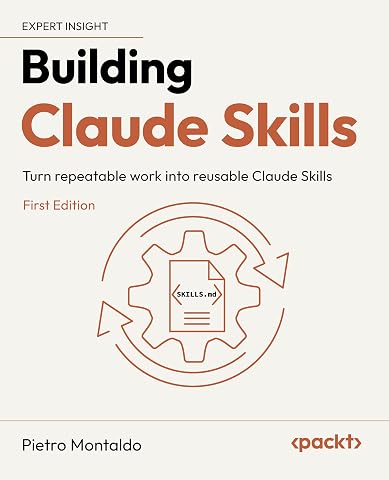
Building Claude Skills: Turn repeatable work into reusable Claude Skills
$23.74

Agentic Coding with Claude Code: The everyday developer's guide to agentic coding with Claude Code
$32.78
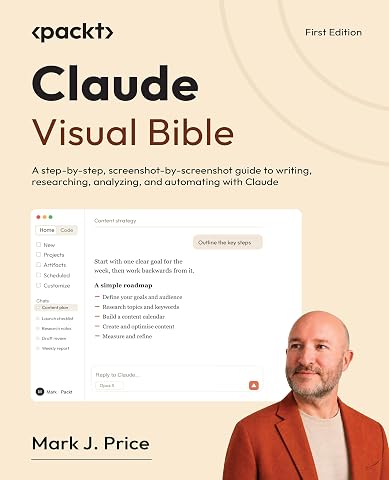
Claude Visual Bible: A step-by-step, screenshot-by-screenshot guide to writing, researching, analyzing, and automating with Claude
$29.74

The Claude Code Operating Model: Build scalable AI coding systems with Skills, MCP, Hooks, agent orchestration, and SDK patterns
$34.19

Agentic Architectural Patterns for Building Multi-Agent Systems: Proven design patterns and practices for GenAI, agents, RAG, LLMOps, and enterprise-scale AI systems
$41.99
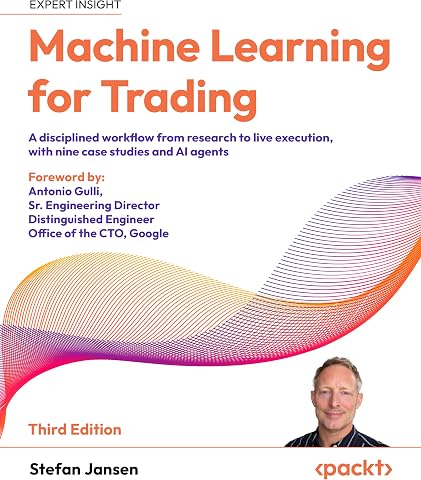
Machine Learning for Trading: A disciplined workflow from research to live execution, with nine case studies and AI agents
$79.99
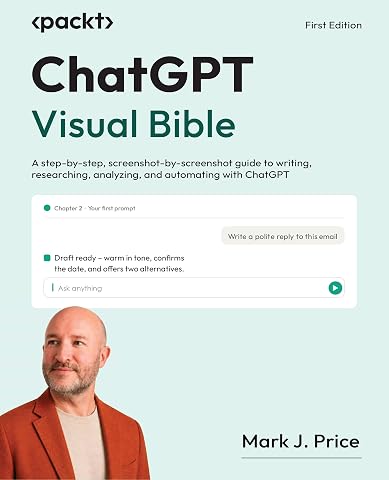
ChatGPT Visual Bible: A step-by-step, screenshot-by-screenshot guide to writing, researching, analyzing, and automating with ChatGPT
$29.74
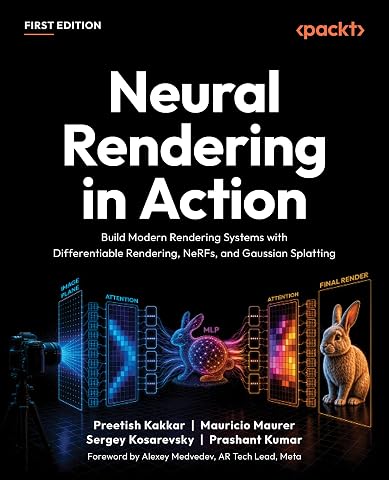
Neural Rendering in Action: Build Modern Rendering Systems with Differentiable Rendering, NeRFs, and Gaussian Splatting
$44.99
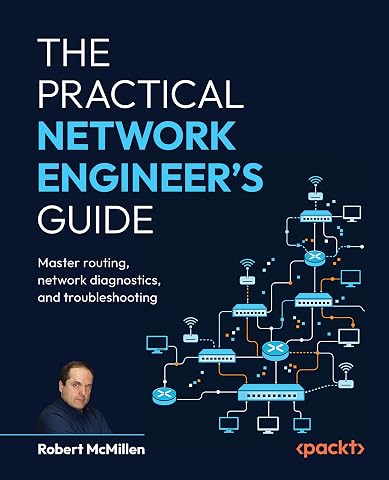
The Practical Network Engineer's Guide: Master routing, network diagnostics, and troubleshooting
$39.99