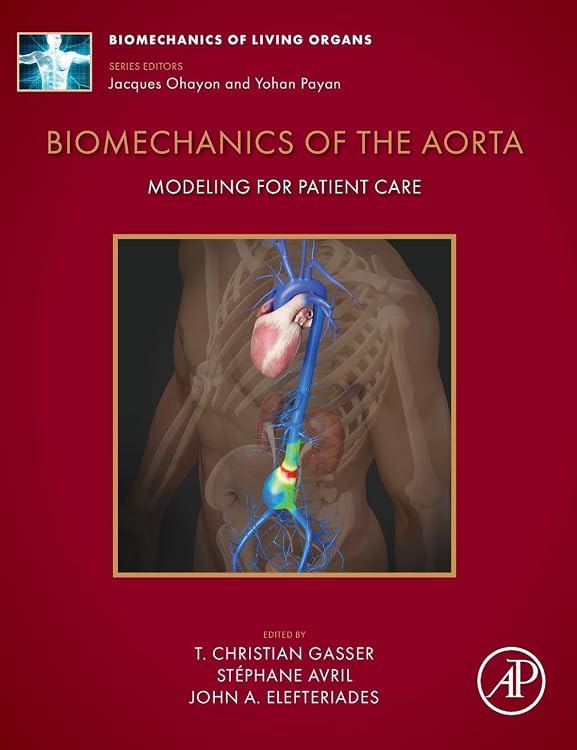
Biomechanics of the Aorta: Modeling for Patient Care
Biomechanics of the Aorta: Modeling for Patient Care is a specialist reference on aortic physiology, imaging, computational modeling, and clinical applications. Its broad scope connects foundational vascular science with topics such as rupture prediction, surgical planning, and case studies.
At a glance
- Covers aortic anatomy, biology, and pathophysiology alongside imaging and tissue characterization.
- Discusses tissue and blood-flow modeling, including rupture prediction and clinical case studies.
- Includes applications involving transcatheter aortic valve implantation, aortic dissections, and pharmacological treatments.
Reference price: $200.00
Price checked: Nov 14, 2026
View offerAhead of Black FridayExplore the selectionPros and cons
Pros
- Bridges foundational biomechanics with clinical topics such as diagnostics and surgical planning.
- The 634-page scope includes imaging, tissue and flow models, and applied case studies.
Technical specifications
9 specifications| Publisher | Academic Press |
|---|---|
| Publication date | July 4, 2024 |
| Edition | 1st |
| Language | English |
| Print length | 634 pages |
| ISBN-10 | 0323954847 |
| ISBN-13 | 978-0323954846 |
| Weight listed | 3.05 pounds |
|---|---|
| Dimensions | 7.5 x 1.5 x 9.25 inches |
Who is it for?
A good fit for
- Biomedical engineering and vascular biomechanics students or researchers seeking a dedicated aortic reference.
- Clinicians and researchers interested in aortic imaging, modeling, or treatment-planning concepts.
Less suited to
- Readers seeking a general introductory biology book or a brief overview of aortic disease.
Frequently asked questions
What topics does the book cover?
The listing describes coverage of aortic anatomy, biology, imaging, tissue characterization, tissue and flow modeling, rupture prediction, and clinical applications.
Does it include clinical case studies?
Yes. The description names applications including transcatheter aortic valve implantation, aortic aneurysm rupture prediction, aortic dissections, and pharmacological treatments.
Who is this book aimed at?
Its subject matter is most relevant to readers studying or working in vascular biomechanics, biomedical engineering, medical imaging, or aortic clinical research.