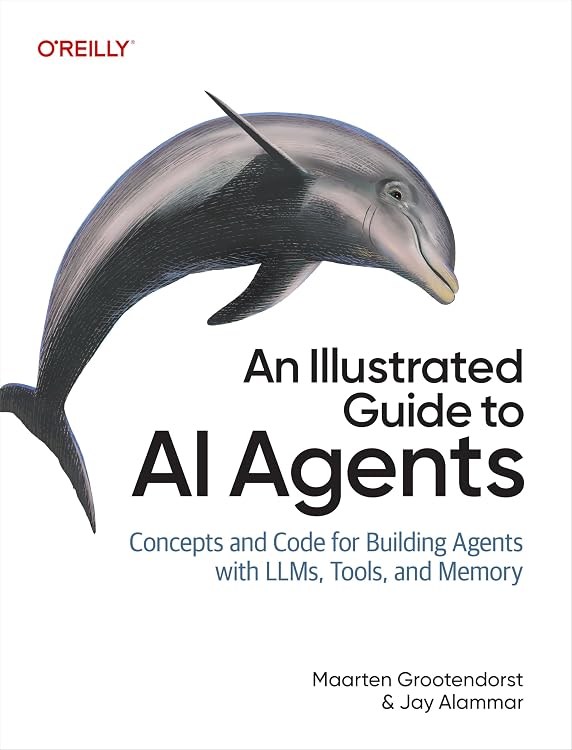
An Illustrated Guide to AI Agents: Concepts and Code for Building Agents with LLMs, Tools, and Memory
Code Building LLMs: An Illustrated Guide to AI Agents by Maarten Grootendorst and Jay Alammar combines visual explanations of agent architecture with a practical Python project. It covers reasoning models, tools, memory, planning, reflection, evaluation, and multi-agent systems, while positioning core concepts as a way to build understanding amid changing frameworks.
At a glance
- Uses hundreds of illustrations to explain AI agent components and processes.
- Builds a Python TinyAgent incrementally, including reasoning, memory, tool use, planning, and reflection.
- Topics include multimodal and reasoning models, multi-agent collaboration, evaluation, distillation, quantization, and reinforcement learning.
- The publisher describes the repository as a maintained companion for current example code and additional material.
Reference price: $79.99
Price checked: Nov 13, 2026
View offerAhead of Black FridayExplore the selectionOften bought together
Pros and cons
Pros
- Pairs conceptual diagrams with a step-by-step Python agent project, serving readers who want both visual intuition and implementation practice.
- The stated audience spans developers, researchers, technical leaders, students, and readers who prefer to skip code.
- Emphasizes durable agent fundamentals rather than chasing fast-changing frameworks and releases.
Technical specifications
8 specifications| Publisher | O'Reilly Media |
|---|---|
| Publication date | October 6, 2026 |
| Edition | 1st |
| Language | English |
| Print length | 448 pages |
| ISBN-13 | 979-8341662698 |
| Dimensions | 7 x 0.91 x 9.19 inches |
|---|---|
| Weight listed | 1.72 pounds |
What to know before buying
Listing details to confirm
The printed examples are described as instructional, while the authors recommend using the companion repository for runnable, maintained code because libraries and APIs evolve. The listing gives a publication date of October 6, 2026, so buyers should confirm edition availability and timing if purchasing before then.
Who is it for?
A good fit for
- Developers who want to assemble and understand a Python AI agent component by component.
- Readers seeking illustrated explanations of agent tools, memory, planning, reflection, and evaluation.
- Technical leaders, students, or curious readers who want the conceptual material without writing code.
- Research and machine-learning readers interested in model internals, training methods, and evaluation.
Less suited to
- Readers looking only for a current framework-specific tutorial, since the book emphasizes fundamentals and points to a companion repository for evolving code.
- Readers seeking a book focused solely on AI theory without an implementation project.
Customer reviews on Amazon
- 5 stars
87% 87% - 4 stars
13% 13% - 3 stars
0% 0% - 2 stars
0% 0% - 1 star
0% 0%
Only aggregate ratings are provided, with a strongly positive pattern in a small sample. That is a limited signal rather than detailed evidence about the illustrations, Python project, or depth of coverage, so buyers should use the stated contents and audience to judge fit.
Frequently asked questions
Does the book include practical coding?
Yes. The description says readers build a working Python agent called TinyAgent across the chapters, adding reasoning, memory, tools, planning, and reflection.
Can I use it without writing code?
The publisher says the illustrations and conceptual explanations carry the story on their own, and that readers can skip the code without losing the conceptual material.
What topics does it cover?
Listed subjects include reasoning LLMs, memory, tools, planning, reflection, evaluation, multimodal models, multi-agent collaboration, distillation, quantization, and reinforcement learning.
Should I run code printed in the book?
The authors describe printed code as instructional and recommend the maintained repository for runnable examples and updates as libraries and APIs change.
Alternative options
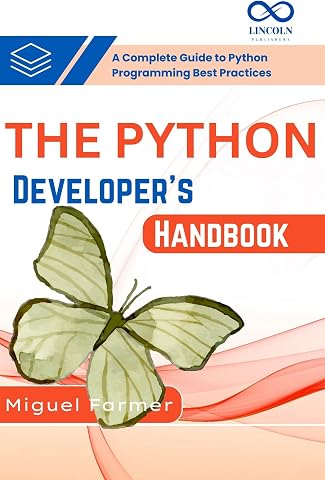
The Python Developer’s Handbook : A Complete Guide to Python Programming Best Practices
$2.99
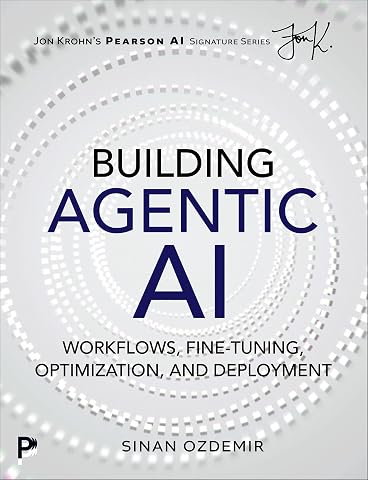
Building Agentic AI: Workflows, Fine-Tuning, Optimization, and Deployment (Pearson AI Signature Series)
$49.97
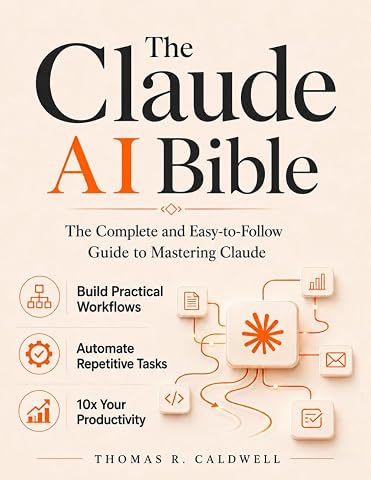
The Claude AI Bible: The Complete and Easy-to-Follow Guide to Mastering Claude – Build Practical Workflows, Automate Repetitive Tasks, and 10x Your Productivity
$24.24
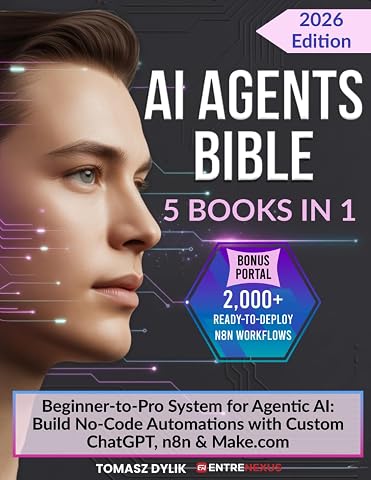
AI Agents Bible (5 Books in 1): Beginner-to-Pro System for Agentic AI: Build No-Code Automations with Custom ChatGPT, n8n & Make.com (The Generative AI Creator Series)
$19.99
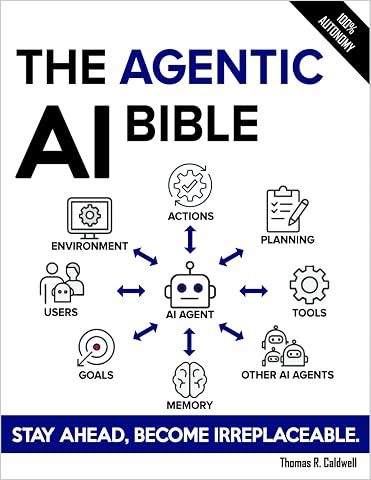
The Agentic AI Bible: The Complete and Up-to-Date Guide to Design, Develop, and Scale Goal-Driven, LLM-Powered Agents that Think, Execute and Evolve
$24.95
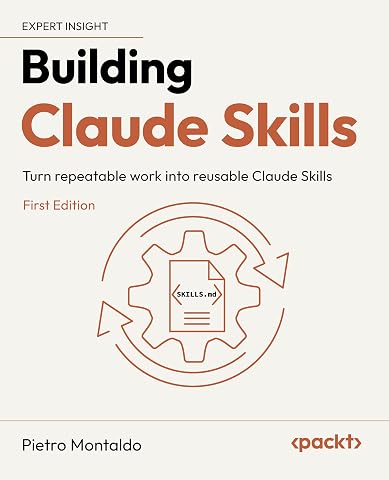
Building Claude Skills: Turn repeatable work into reusable Claude Skills
$23.74
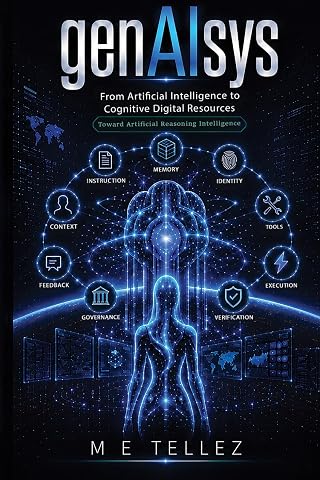
genAIsys: From Artificial Intelligence to Cognitive Digital Resources
$34.99
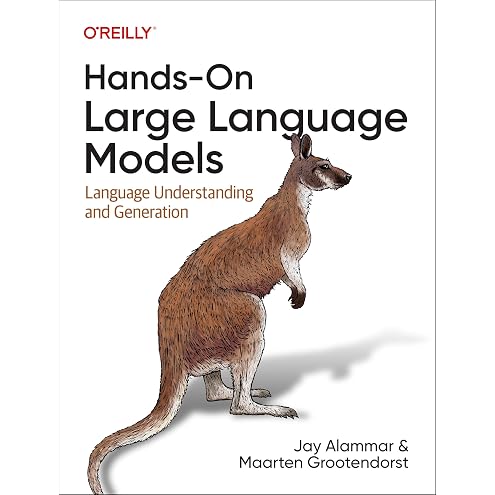
Hands-On Large Language Models: Language Understanding and Generation
$37.68
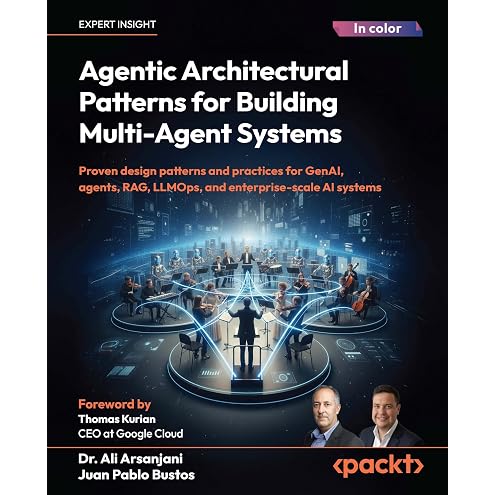
Agentic Architectural Patterns for Building Multi-Agent Systems: Proven design patterns and practices for GenAI, agents, RAG, LLMOps, and enterprise-scale AI systems
$41.99
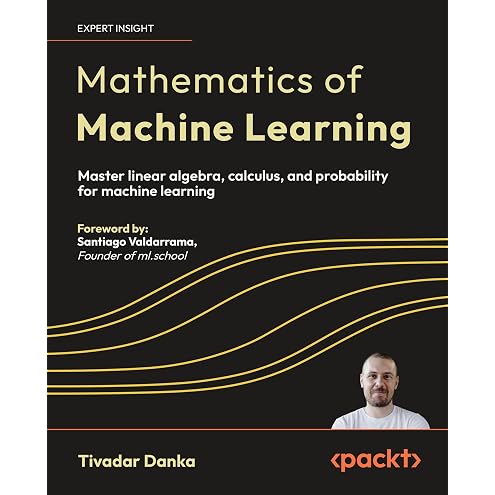
Mathematics of Machine Learning: Master linear algebra, calculus, and probability for machine learning
$39.97
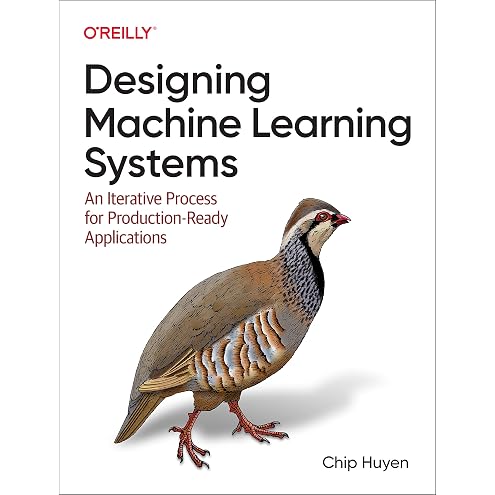
Designing Machine Learning Systems: An Iterative Process for Production-Ready Applications
$39.82
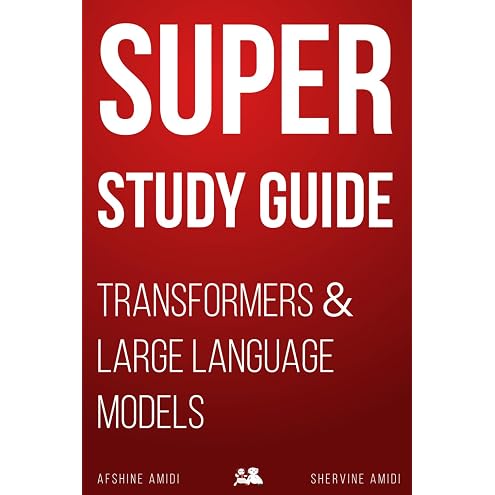
Super Study Guide: Transformers & Large Language Models
$35.28